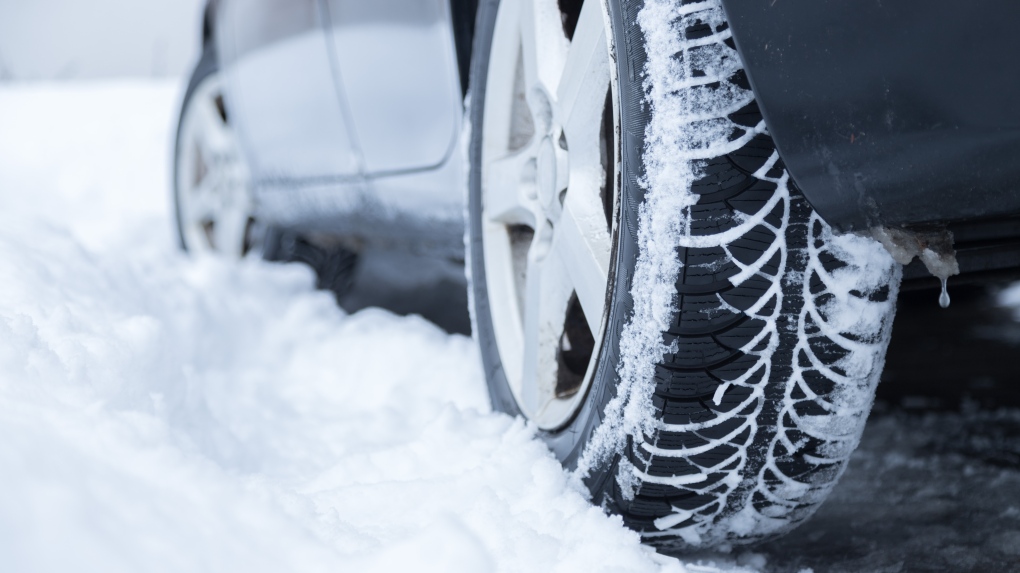
FORT ST. JOHN, B.C. - Drivers travelling on designated Northeast B.C. highways will soon be required to have winter-rated tires as the province’s seasonal tire regulations take effect October 1.
According to Road Safety at Work, motorists should look beyond the minimum legal requirement when choosing tires for winter driving conditions.
The law requires passenger vehicles and light trucks travelling on designated routes to use tires displaying either the M+S (mud and snow) marking or the three-peaked mountain and snowflake symbol.
Both meet the legal standard, but Road Safety at Work says they do not offer the same level of performance in cold weather.
“Winter tires aren’t just for snow,” said Trace Acres, Program Director for Road Safety at Work. “They give you more grip and control when temperatures drop below 7C, which can happen long before the first snowfall.”
The organization recommends tires bearing the three-peaked mountain and snowflake symbol, saying they are designed to remain flexible in cold temperatures and provide improved traction on wet, snowy and icy roads.
Road Safety at Work says those tires can reduce stopping distances by up to 33 per cent in poor conditions compared to other tires.
Drivers who already own winter tires are encouraged to inspect them before installation. While the legal minimum tread depth is 3.5 millimetres, Road Safety at Work recommends at least 6.5 millimetres of tread for improved traction.
The group also advises motorists to check for damage, maintain proper tire pressure and install four matching winter tires to maximize vehicle stability.
The organization also notes winter tire selection is an important workplace safety issue for employees who drive for work, including those using their personal vehicles on the job.
Employers are responsible for ensuring vehicles used for work are properly maintained and equipped for winter conditions.
Drivers unequipped with winter tires on designated B.C. highways can receive a fine of $121, according to the province.
B.C.’s winter tire regulations remain in effect until March 31 on many highways and until April 30 on routes that pass through mountain passes and high-snowfall areas.
More information about winter tire requirements and winter driving safety is available through Road Safety at Work.