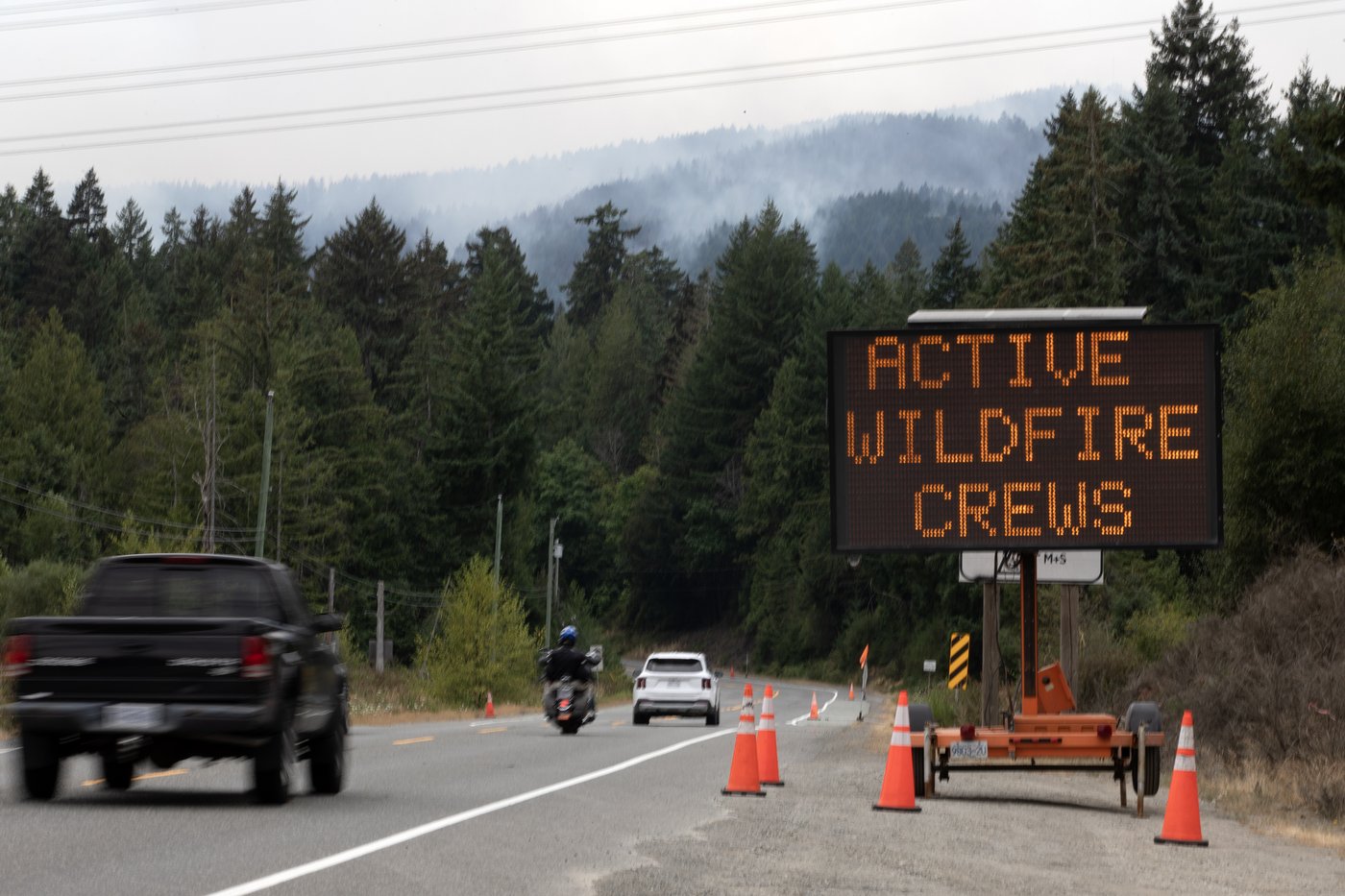
After British Columbia’s worst wildfire season on record in 2023, a team of researchers at the University of British Columbia is taking a deeper dive into the potential health hazards related to drinking water.
Among them is Raul de Leon Rabago, a master’s student in the civil engineering program, who is studying how contaminants from wildfire smoke eventually make their way into lakes and rivers.
“These wildfires are not stopping. These wildfires are not going back to any normal,” said Rabago
The effects on air quality are often highly visible, with smoky haze drifting into the Lower Mainland and the United States. Rabago said the contaminants eventually reach the ground, where they are washed away by rain and later by melted snow.
“Everything gets into our lakes, or rivers,” he said.
That poses challenges for water treatment plants, which are typically designed to handle a range of contaminants based on historical conditions.
“Treatment plants are just designed to deal with a range of contaminants that would have been the normal load for 10 or 20 years, but with these increasing wildfire seasons it’s a lot more than what they’d normally expect,” Rabago said.
Data in B.C. is still limited, but research from Alberta offers a glimpse of potential impacts. After the massive 2016 Fort McMurray wildfire, studies found elevated levels of nitrogen, phosphorus and lead in rivers. Major floods in 2013 also washed stored ash into waterways, causing phosphorus levels seven to nine times higher than normal.
“Imagine emptying a bucket of ash into a bathtub,” said Dr. Qingshi Tu, assistant professor in the faculty of forestry and environmental stewardship. “When the water is stirred, the ash resurfaces. That’s what can happen in watersheds after large fires.”
Rabago said Metro Vancouver is better protected, thanks to multiple reservoirs, but smaller communities — often the most impacted by wildfires — may need to increase their budgets to safeguard their water systems.
“They need to start protecting their watersheds in a more intense way,” he said.
The researchers are developing a new model linking wildfire behaviour, smoke and river systems — hoping to help cities see risks coming years in advance.