TUMBLER RIDGE, B.C. - The District of Tumbler Ridge has approved a sweeping community recovery plan intended to guide the municipality through the months and years following the February 10 tragedy.
The plan lays out short, medium and long-term priorities focused on mental health, children and youth, community connection, first responders, communication and future resilience.
District staff say the circumstances facing the community require a coordinated, long-term approach to recovery.
Council was also asked to authorize the recruitment of a Community Recovery Manager and a Recovery Implementation Coordinator for terms of up to three years, provided external funding can be secured.
The original recovery manager position was funded through Emergency Management and Climate Readiness to develop the plan.
The District identifies the Canadian Red Cross, Pacific Blue Cross and the Northeast BC Community Foundation as potential sources of additional funding to begin implementing it.
Six priorities for recovery
The plan is based on extensive community engagement, including five public surveys, three small-group sessions and more than 100 interviews conducted over a six-month period.
Families directly impacted by the tragedy, students, educators, emergency services and other community stakeholders were among those consulted.
Six priorities emerged:
1 People, health and psychosocial well-being.
2 Children, youth and education.
3 Community connection, safety, inclusion and social recovery.
4 Resilient organizations, first responders and community leadership.
5 Communication, engagement and service navigation.
6 Infrastructure, memorialization, preparedness and future resilience.
Mental-health recommendations include advocating for sustained local trauma, grief and psychosocial services, developing a grief and bereavement framework and conducting a community psychosocial assessment to identify service gaps and emerging needs.
For children and youth, the plan calls for expanded Youth Centre hours, more year-round recreation and programming, greater opportunities in arts, music, technology and science, and continued advocacy for a Safer Schools Liaison in the community.
The plan also proposes additional support for first responders and frontline workers, including confidential mental-health and wellness pathways and a peer-support program for emergency-service personnel.
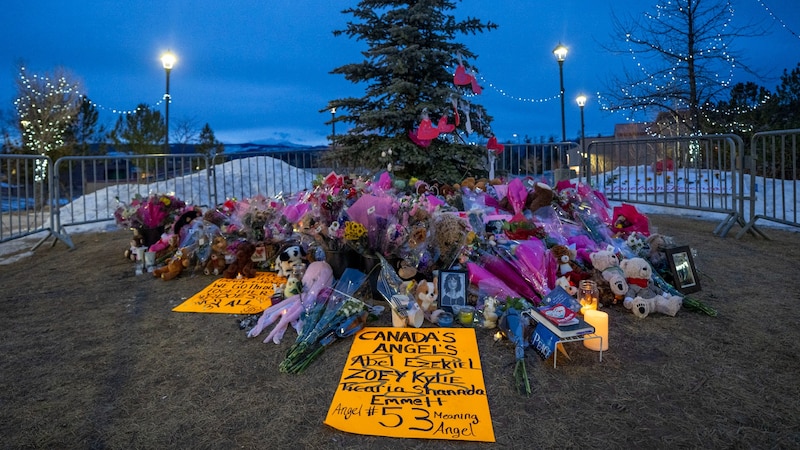
Memorial planning led by impacted families
Memorialization is another major component of the recovery strategy.
The plan recommends establishing a Memorial and Commemoration Working Group, with impacted families guiding the process. That group would help coordinate first-anniversary activities and planning for both the existing and a future permanent memorial.
A permanent memorial is not expected to be rushed. The plan says a facilitated process to select and design one should begin when impacted families are ready, with funding secured before final commitments are made.
The District also proposes working with the museum to preserve records connected with the tragedy and recovery, and developing a process for community engagement on the future of the former school site.
Recovery expected to take years
Implementation is divided into three stages: stabilization during the first 12 months, building longer-term capacity from 12 to 24 months, and transitioning toward long-term resilience between 24 and 36 months.
The plan stresses that approving it does not automatically commit council to funding every recommendation.
Initiatives requiring new spending, staffing, capital investment, policy changes or changes to municipal service levels would still have to return to council for consideration.
The document is also intended to remain flexible as the community’s needs change.
Progress is expected to be reviewed at least every six months during the first two years and annually after that, unless the District’s recovery leadership team determines otherwise.
The plan concludes that Tumbler Ridge’s recovery will take place “over years rather than months,” with the immediate focus on maintaining existing supports while addressing gaps in mental-health care, grief services, opportunities for youth, organizational capacity, communication and community connection.