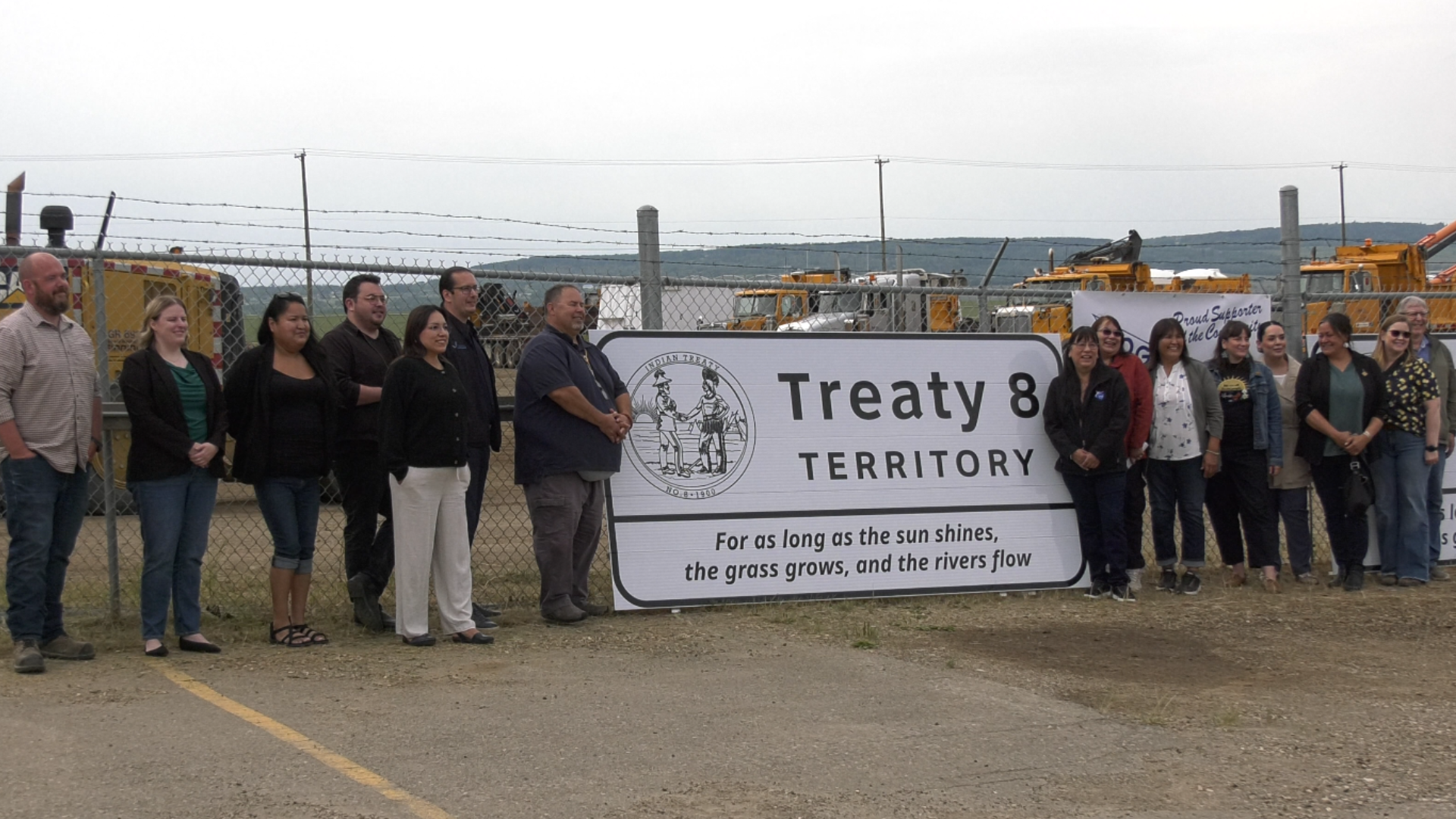
DAWSON CREEK, B.C. - Leaders from Treaty 8 First Nations, provincial officials and industry partners gathered in Dawson Creek on Tuesday to bless a series of new highway signs that will welcome travellers entering Treaty 8 Territory in northeastern British Columbia.
The signs, created through a partnership involving Treaty 8 First Nations, Argo Road Maintenance and B.C.’s Ministry of Transportation and Transit, are designed to increase awareness of Treaty 8 lands.
One of the goals of First Nations leaders is to bring awareness to the history behind the agreement that covers a vast region of northeastern B.C. and extends into Alberta, Saskatchewan and the Northwest Territories.
The blessing ceremony in Dawson Creek marked the culmination of a project years in the making.
Chief Roland Willson of the West Moberly First Nations said he has long wondered why larger signs recognizing Treaty 8 Territory were not in place.
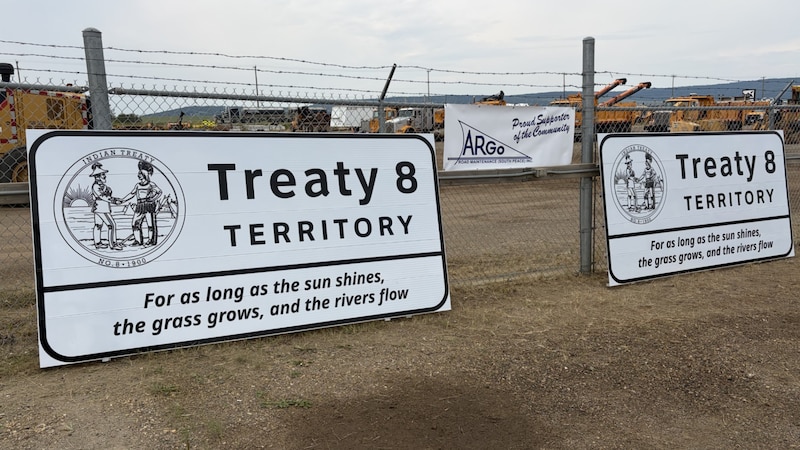
“We’ve come a long way,” Willson said, describing the new signs as prominent and highly visible. He said the signs will help create greater awareness among residents and visitors about Treaty 8 and its significance.
According to Willson, the signs serve as a reminder that Treaty 8 is an agreement between First Nations and Canada, and that many people are unfamiliar with its history and the promises it contains.
Willson said the project required extensive collaboration between Treaty 8 Nations and government agencies, as well as navigating transportation standards, regulations and approval processes before the final design could be installed.
A total of six signs are expected to be placed along major routes entering Treaty 8 Territory in British Columbia.
Locations include northern and southern access points to the region, with one sign planned near Prince George and others along routes entering from Alberta.
Treaty 8 First Nations from across northeastern B.C. were involved in the project, including communities such as West Moberly, Prophet River, Doig River First Nations, Fort Nelson, Salteau, Halfway River and Blueberry River.
Willson said the initiative reflects the shared territory and ongoing relationships among First Nations, municipalities and other partners throughout the region.