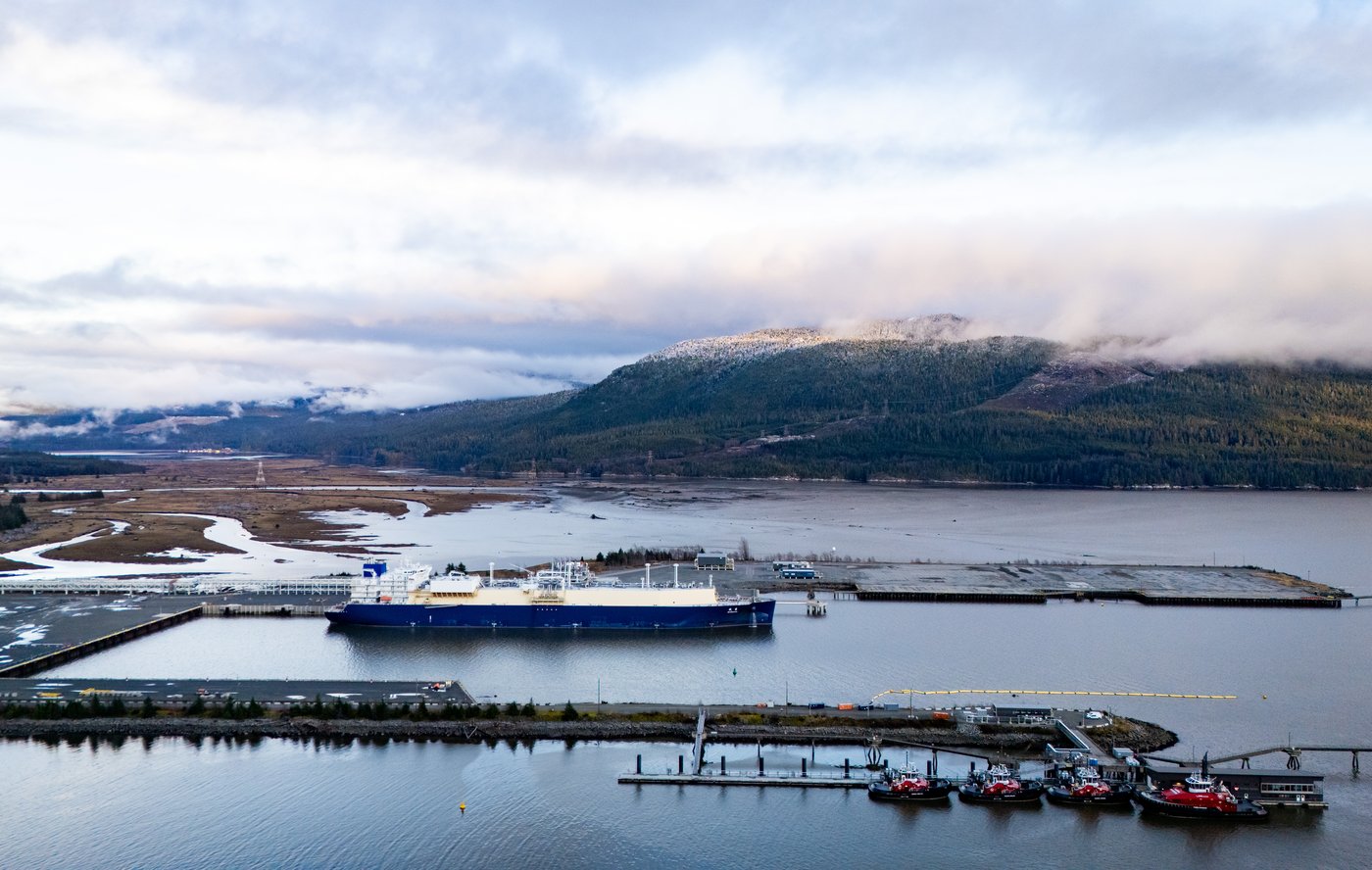
A major liquefied natural gas proposal on British Columbia’s north coast is drawing renewed attention and highlighting what could be another economic opportunity for the Peace Region.
A South Korean shipbuilder has signed a memorandum of understanding to explore work on proposed floating LNG export facility near Prince Rupert.
The non‑binding agreement between Hanwha Ocean and Kanata Clean Power will look to explore development of the facility that could produce up to 12 million tonnes of LNG per year.
The proposed Kanata LNG project is not new, it has been under discussion for some time. But the latest agreement signals continued interest from international partners as the project moves through early-stage evaluation.
The memorandum of understanding is described as a preliminary step and does not commit either company to final investment or construction.
If built, the project expected to carry a price tag of roughly $15 billion U.S. dollars or about $21 billion Canadian dollars at current exchange rates.
That cost reflects the scale and complexity of a floating LNG project. Plans include constructing a large offshore liquefaction facility, along with the equipment needed to process natural gas, marine infrastructure, and long-term operations and maintenance.
While the development would be located on the north coast, the implications are closely tied to Northeast B.C.
Natural gas produced in the Peace Region is expected to supply LNG export facilities like this one, meaning projects on the coast can drive demand, investment, and employment upstream.
The Kanata proposal also includes the potential for Indigenous participation, with First Nations offered the opportunity to acquire up to a 50 per cent ownership stake, subject to negotiations and approvals.
Still, significant hurdles remain. The project would need environmental approvals, commercial agreements, and further engineering work before moving ahead.
For communities in Dawson Creek, Fort St. John, and across Northeast B.C., projects like Kanata LNG are being watched closely as indicators of future growth in the natural gas sector, particularly at a time when the region is looking for new economic stability.
This latest agreement underscores continued momentum in LNG development and points to another potential pathway for Peace Region gas to reach global markets.