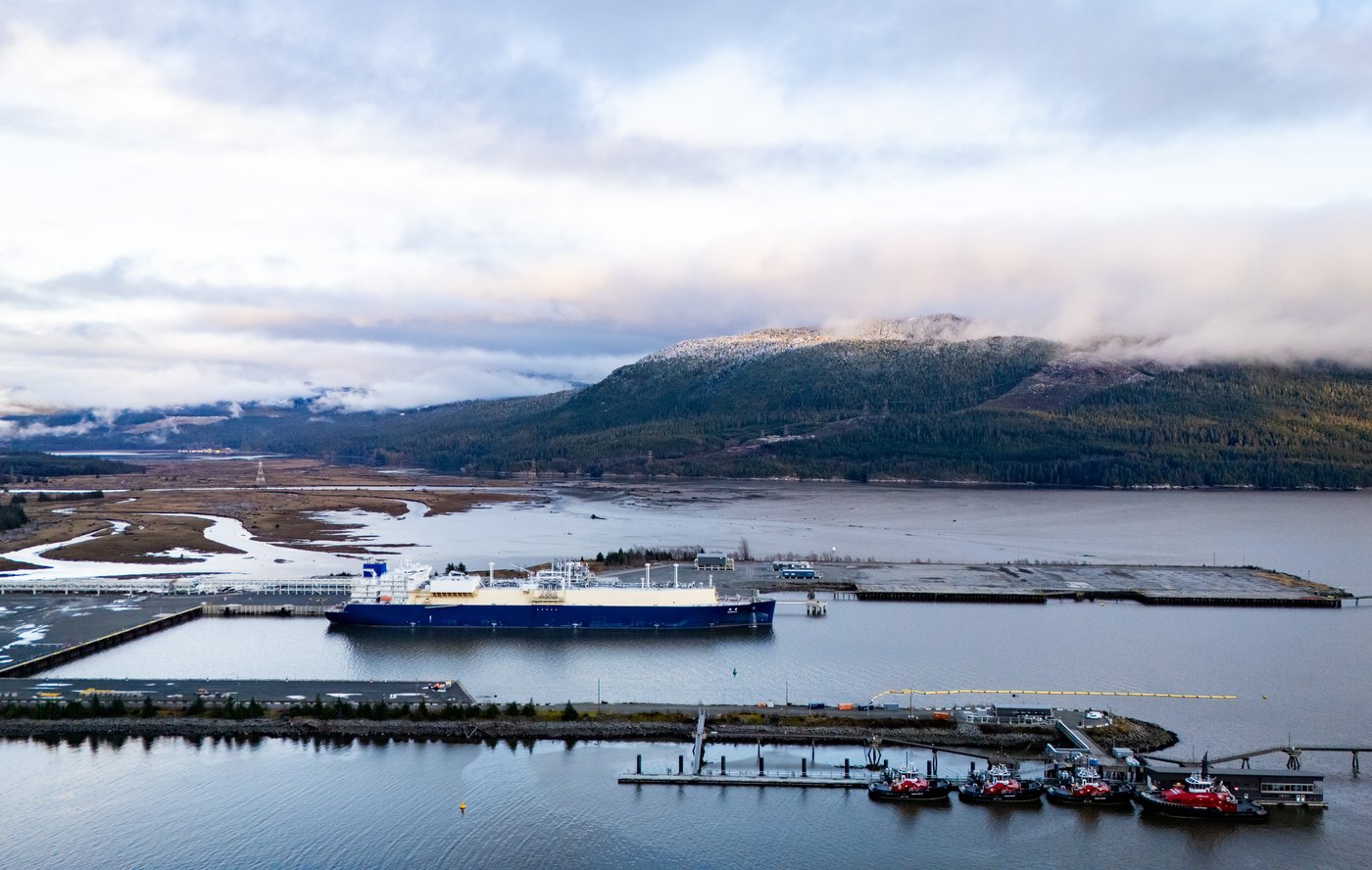
A proposed deal to ship Canadian natural gas to Europe from a northern British Columbia LNG facility could carry significant economic implications for Northeast B.C., including communities like Dawson Creek and Fort St. John.
According to Bloomberg News, details contained in an internal memo shared Tuesday, indicate that Canada is expected to announce an agreement to supply liquefied natural gas to Germany.
The LNG supply would be shipped from the planned Ksi Lisims LNG export project on northwest coast of BC.
The multi-billion-dollar project, backed by a partnership that includes the Nisga’a Nation and major industry players, has already received regulatory approval but has not yet reached a final investment decision.
While the export facility itself would be located on the coast, much of the natural gas feeding the plant would come from northeastern B.C.’s Montney region, an area that includes significant activity near Fort St. John, Dawson Creek and surrounding communities.
Potential boost for local industry
If the project moves ahead, it could increase demand for natural gas production in the Peace Region, where drilling and processing are already a major economic driver.
Increased demand could support jobs in the upstream sector, including drilling operations, pipeline construction and maintenance, and related service industries. The region is already a key supplier of natural gas for existing export and domestic use, and additional global demand could further solidify that role.
Municipalities like Dawson Creek and Fort St. John could also see indirect economic benefits, including increased business activity and workforce growth.
Global demand driving interest
The proposed deal comes as European countries look to diversify their energy supply away from Russia and other geopolitically unstable regions, according to federal officials.
Germany’s state-owned energy company SEFE is identified as the potential buyer of the LNG, with an official announcement expected from Canada’s energy minister.
Industry observers say that long-term international agreements like this are key to unlocking investment in large-scale LNG projects, which require billions in upfront capital before construction can begin.
Project still awaiting final decision
British Columbia Premier David Eby says the deal makes it more likely the Ksi Lisims project on the West Coast will proceed.
Natural Resources Minister Tim Hodgson is poised to make an announcement “regarding international energy exports” in Vancouver on Wednesday.
Eby says sealing up offtake agreements with buyers is a key step before the Ksi Lisims partners reach that milestone.
“I feel like British Columbia is throwing the ball up and it’s giving the federal government a chance to take that alley-oop and dunk it,” Eby told reporters after a meeting with western premiers in Kananaskis, Alta.
If approved, the facility is expected to produce millions of tonnes of LNG annually, placing it among Canada’s major export projects.
For communities across Northeast B.C., the outcome may help determine the pace and scale of natural gas development in the years ahead and whether the region sees another wave of economic growth tied to global energy markets.
With files from The Canadian Press