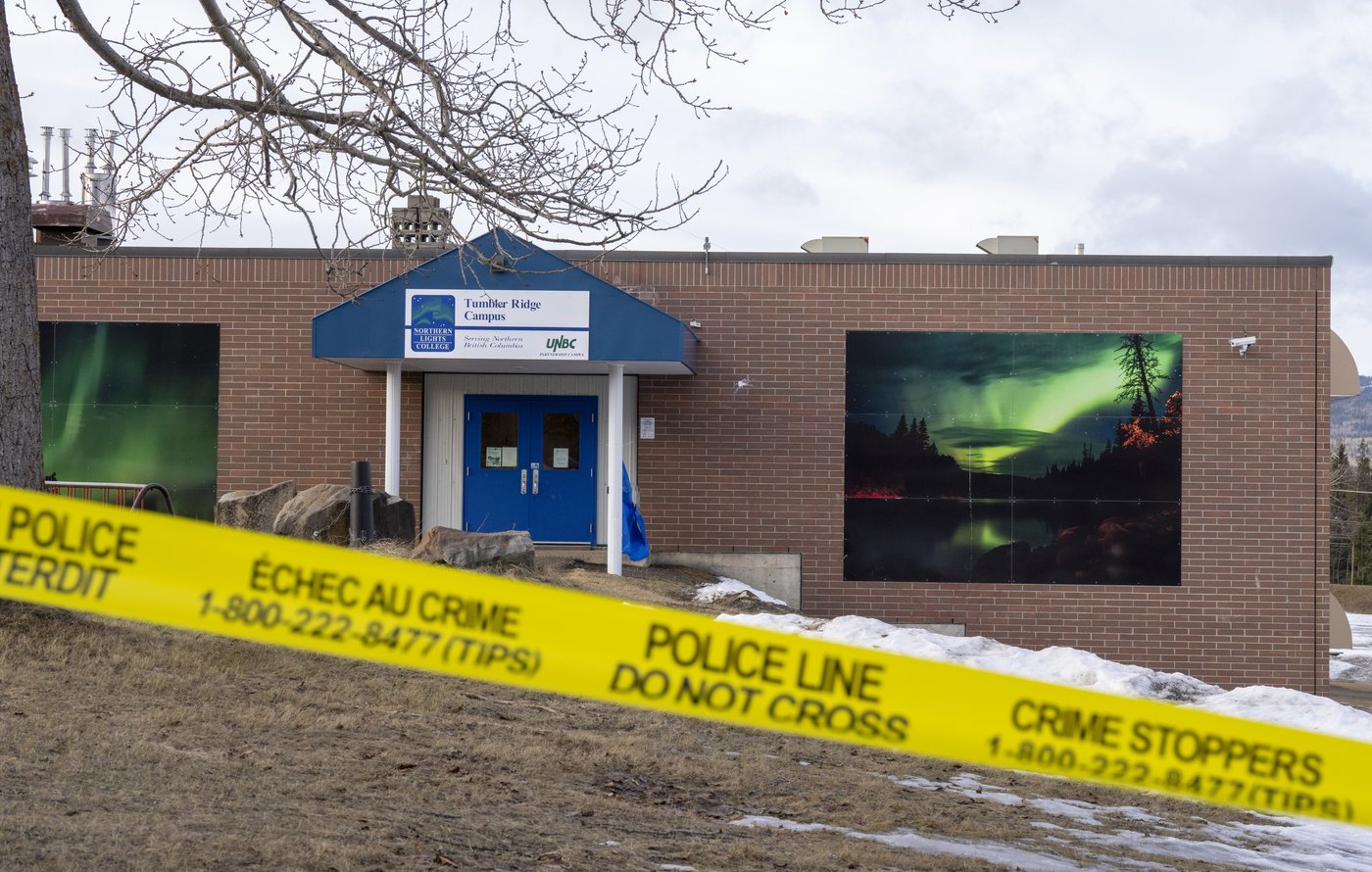
It’s been six months since 18-year-old Jesse Van Rootselaar shot and killed eight people before dying by suicide.
While details about the victims killed in Tumbler Ridge—at the local secondary school and at the Van Rootselaar home—have been shared, many questions remain, with police tight-lipped about many aspects of the case.
In an effort to get more answers, CTV News and a consortium of media outlets went to court, ultimately obtaining hundreds of pages of heavily redacted documents.
They include search warrants and shed more light on police actions on the day of the mass shooting, and the subsequent efforts by the RCMP to investigate.
Shooter’s erratic driving
The documents share new details about how information was reported to police in the buildup to the mass shooting.
In an Information to Obtain document, Const. Jonathan Paquin provides details of the investigation, describing the day of the shooting as a “dynamic unfolding event.”
He goes on to detail a traffic incident report, in which a caller reported an erratic driver who crashed into a snowbank before driving off in a damaged SUV from the Van Rootselaar home. The caller also reported that the driver was possibly someone named “Steezy”—“a male who dressed like a female.”
Van Rootselaar was transgender. She was assigned male at birth and had socially transitioned, publicly identifying and presenting herself as a woman.
The document indicates the RCMP received another complaint that there were two dead bodies at the Van Rootselaar home, shotgun shells on the floor. Police then cleared the home and found a firearm and a pellet gun.
The document also illustrates initial police confusion on the number of shooters tied into the various names Van Rootselaar had used before and after transitioning.
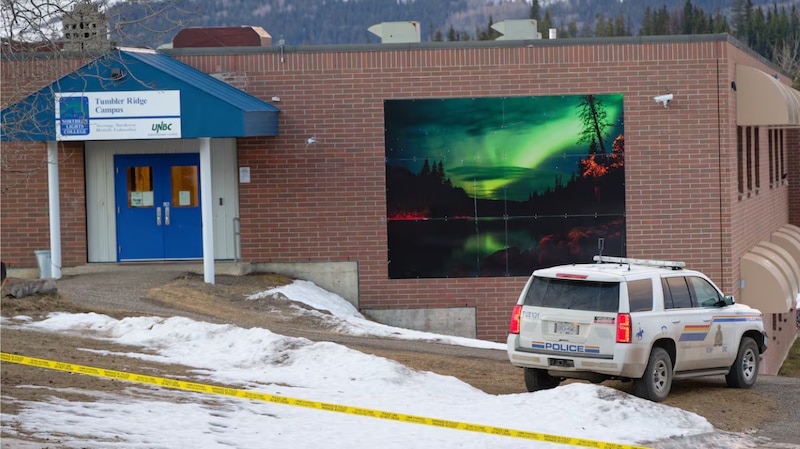
Later in the document, the police response to the school is detailed.
Officers entering the school were shot at.
Other officers from the highway patrol and emergency response team arrived at various stages as the incident unfolded.
Police report finding various dead victims and the process of moving others to safety, as well as ultimately finding Van Rootselaar dead from a self-inflicted gunshot wound.
The documents also reveal the shooting at the school was captured on CCTV.
A warrant among the documents details the search of the Van Rootselaar home, with police detailing the discovery of a deceased adult female and a deceased male child.
Mounties report finding a Sony Handy cam, a black iPhone with a cracked screen, two laptops and an SD card.
At one point, they say their investigation has revealed Van Rootselaar had mental health problems and was fascinated by firearms.
Police investigation
“Information to Obtain” applications are documents police present to courts when seeking search warrants.
The documents released to CTV News and its media consortium partners include three ITOs, the first of which was filed at noon on Feb. 11, less than 24 hours after the shooting at the high school began.
This application sought warrants to search two locations: a property with a redacted address that appears to be the home where Van Rootselaar’s mother and half brother were killed, and a green 2023 Hyundai Palisade parked outside the school.
Police were looking for biological evidence, firearms and ammunition at both locations. At the home, they also sought electronic devices that may have belonged to the shooter, as well as documents verifying residency.
The second ITO was filed on Feb. 20 and seeks search warrants for various electronic devices, some of which were found during the earlier searches.
The document seeks texts, emails, media files, call logs, location history, internet history, social media activity, documents, contacts, account and operating system data from a device identified as “Jesse’s iPhone,” as well as from the iPhone with the cracked screen, a purple Aocwei laptop, a MacBook Air laptop, a silver iPhone and another “cellphone,” the description of which is redacted.
It also seeks media files from the Sony Handy cam, an SD card and a purple camera with an SD card inside.
Finally, the ITO asks for a warrant to search an exhibit held in storage at the Prince George RCMP detachment, which is described later in the document as “a USB with data from a black cellphone.”
Paquin, a member of the North District Major Crime Unit who filed the ITOs, explains in his application that the data in question was extracted from a phone on Feb. 11, the day after the shootings. The phone was returned to a redacted entity that night, after the extraction.
OpenAI’s role
In between the first and second ITOs, on Feb. 15, the U.S. Federal Bureau of Investigation notified the RCMP that OpenAI had located two ChatGPT accounts it believed had belonged to Van Rootselaar.
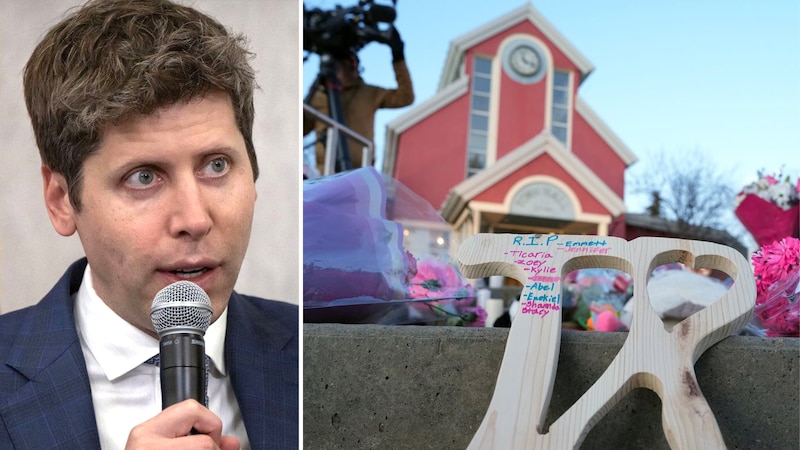
OpenAI has been a high profile part of this story. The artificial intelligence company has previously apologized for not alerting police to Van Rootselaar’s concerning use of the tool.
The final ITO was filed on March 6. It seeks a production order against OpenAI, ordering the company to turn over subscriber information—including name, date of birth, phone number, email and billing information—for two accounts.
An additional demand for information from the tech giant related to each account is redacted.
Notably, the production orders the ITO seeks are time-limited. The exact timeframes for the data sought are redacted, but both end in February, with one of them ending on Feb. 10, the day of the massacre.
Last month, when B.C.’s provincial government announced it was preparing a lawsuit against OpenAI over the shootings, the provincial RCMP noted that its criminal investigation into the matter remained ongoing.
“We have not eliminated the possibility that charges could be laid,” the B.C. RCMP said in a statement at the time.
“It is important to understand that the absence of publicly disclosed details does not mean investigators do not have that information. Rather, we must protect the integrity of the ongoing investigation, particularly with potential future prosecution in mind.”
The statement also references a planned coroner’s inquest on the shooting, saying it plans to “fully participate” in that process.
Documents heavily redacted
While the documents obtained by CTV News and other members of the media consortium have revealed new details, the documents are heavily redacted, leaving many questions related to the specifics of the case.
In the documents, police outline reasons for requesting a sealing order.
“This is a large and complex investigation that has garnered significant national and international attention with significant media coverage of the incident and police investigation,” Paquin notes, at one point.
“For this reason, I believe that evidence outlined in this Information to Obtain, if prematurely disclosed, would certainly be disseminated through various news outlets that would affect and influence the current ongoing criminal investigation, the coroner’s inquest, and a potential public inquiry.”
Paquin also expressed concern, writing: “I am aware that mass casualty incidents can inspire copycat attacks. For example, the Columbine High School massacre is well known to have had this effect where it inspired other shootings in the following years. Therefore, I believe premature disclosure of this Information to Obtain without a complete criminal investigation, and the following coroner’s inquest or public inquiry where all the facts are known could put the public at risk.”