FORT ST. JOHN, B.C. - Prince George–Peace River–Northern Rockies MP Bob Zimmer is criticizing the federal Liberal government’s latest budget, arguing its projected borrowing levels will leave future generations with a significant financial burden while failing to adequately address key issues facing northern communities.
Zimmer said the budget’s projected increase in federal debt is “incredibly alarming,” pointing to what he described as hundreds of billions of dollars in new borrowing.
In all, for the current budget year, the federal government is projecting a $62.3-billion deficit.
He argued the growing debt load will ultimately have to be paid by future Canadians.
“It’s credit cards that we’re passing on to our kids that they will have to pay,” he said.
The Conservative MP also questioned whether federal spending priorities are aligned with the challenges facing northern B.C., including health-care staffing shortages and repeated emergency department disruptions across the region.
He said debt-servicing costs could limit the government’s ability to invest in frontline services.
“When are you going to actually start fixing what really matters to us?” Zimmer said while calling for greater investment in doctors, nurses and health-care professionals.
Canada will spend more on debt charges than health care next year
The Carney government is emphasizing spending restraint in operating expenses and says by next year the operating budget will be in balance.
But tens of billions more is being spent under capital investments that are driving up the deficit and debt charges.
Starting this year, the budget shows that Canada will spend more to service the debt each year than it will spend on health transfers to the provinces.
The budget projects that it will cost $60.2 billion to service Canada’s debt, about 10 cents of every tax dollar. In comparison, the Carney government has budgeted $57.4 billion this year for health care.
By 2030 the budget shows that about 12 cents of every tax dollar will go to debt servicing charges.
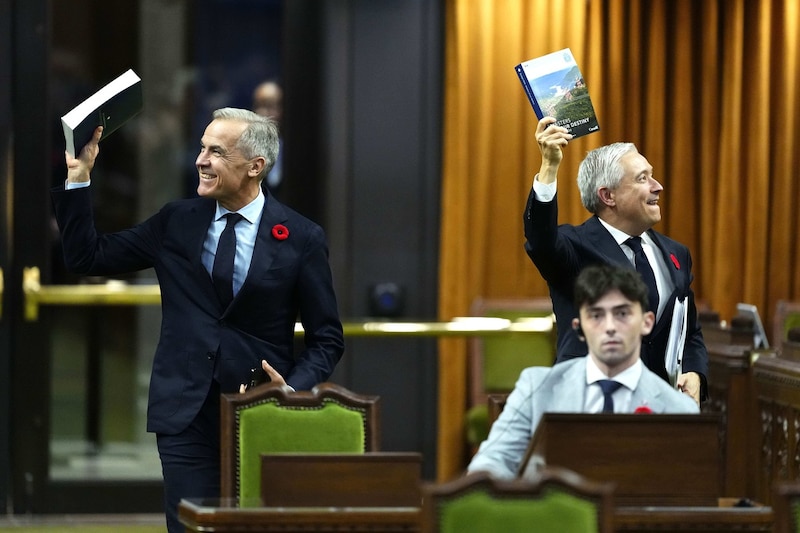
Foresty groups in B.C. have warned the industry is at a breaking point
Forestry was another major focus of Zimmer’s response.
The federal budget includes $6.5 billion in support for Canada’s forest industry over six years, including funding for new forestry-sector projects, facility modernization and improved fibre supply management.
However, industry leaders have said it remains unclear how much of that funding will reach British Columbia.
While acknowledging forestry-related measures in the budget, Zimmer said workers and businesses are looking for more than financial assistance.
“Any logging truck driver doesn’t want a handout. They want access to what used to be a lucrative forest sector in British Columbia,” he said.
Zimmer argued governments should focus on improving conditions for the forestry industry and resolving long-standing trade disputes, including the Canada-U.S. softwood lumber issue.
He pointed to mill closures across British Columbia over the past decade as evidence that more action is needed.
The federal government has said the forestry investments are intended to improve productivity and competitiveness as the sector continues to navigate U.S. tariffs and trade pressures.
With files from Marieke Welsh CTV News