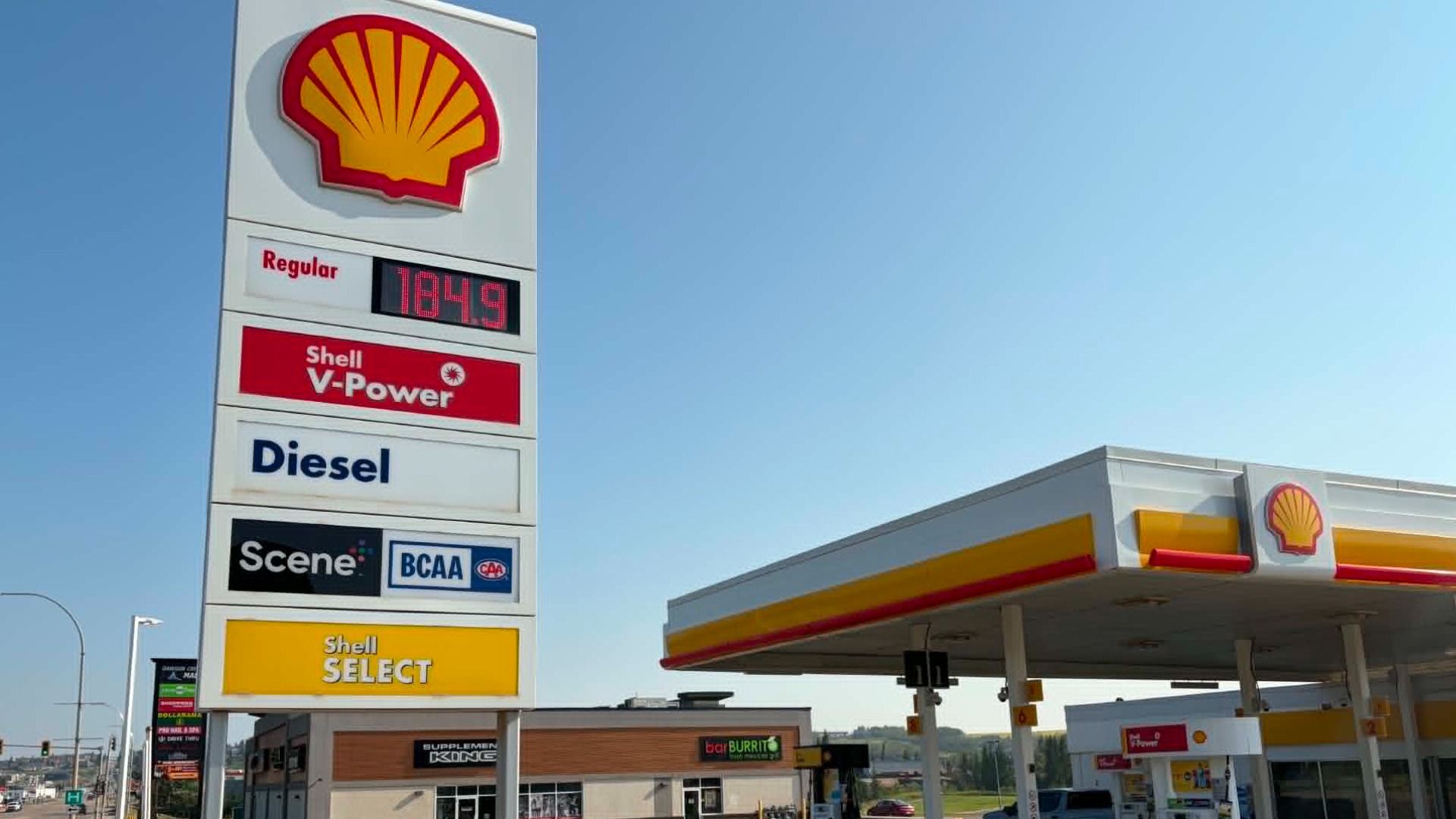
Drivers in Northeast B.C. are paying significantly more at the pump after gas prices surged Wednesday, with some stations in Dawson Creek approaching $1.85 per litre.
According to Canadian fuel analyst Dan McTeague, president of Canadians for Affordable Energy, gasoline prices in the region have climbed by about 14 cents per litre over the last several days.
Some stations in Dawson Creek were selling fuel for roughly $1.84 per litre, while prices in Fort St. John are averaging $1.73 per litre.
McTeague said motorists should prepare for further increases in the coming days.
“Price increases may be gradual, but they’re coming and they’re inevitable,” said McTeague.
Edmonton fuel supplies influence local prices
While many drivers may wonder why prices differ between Fort St. John and Dawson Creek, McTeague said both communities ultimately receive refined gasoline from Edmonton.
He noted that transportation costs, taxes and local competition all play a role in determining pump prices.
Because fuel is shipped from Alberta before reaching Northeast B.C., local prices do not always react immediately and at the same time to changes in wholesale markets.
McTeague notes that deliveries can create a lag of roughly seven to 10 days before major wholesale increases are fully reflected at local pumps.
McTeague suggested some stations may still be selling fuel purchased at lower wholesale prices, but those inventories are being depleted.
Why experts expect prices to rise
McTeague pointed to tightening global oil supplies and transportation disruptions as key reasons behind the latest increase.
He cited ongoing concerns involving the Strait of Hormuz, shipping risks in the Red Sea, attacks on Russian energy infrastructure and declining oil inventories in the United States.
Together, he said, those factors are reducing global supply buffers and putting upward pressure on fuel markets.
“The world is running out of buffer,” McTeague said. “The shortages are going to start to show up in higher prices.”
Why Canadian drivers feel the impact
“Despite producing oil and gas domestically, Canadians still pay prices influenced by global markets,” McTeague said.
Crude oil and refined fuels are traded internationally, meaning events around the world can affect gasoline costs in communities thousands of kilometres away, including Fort St. John and Dawson Creek.
He also pointed to provincial and federal fuel regulations and taxes as contributing factors in British Columbia’s higher fuel costs compared to Alberta.
McTeague said another factor pushing prices higher is the value of the Canadian dollar.
Oil is traded globally in U.S. dollars, meaning Canadian refiners and fuel suppliers must effectively pay more when the Canadian dollar weakens against its American counterpart.
Even if the price of crude oil remains unchanged, a lower Canadian dollar increases the cost of purchasing oil and refined fuel products, costs that are often passed on to consumers at the pump.
He said Canadians face a unique challenge because while the country produces large amounts of oil, the commodities are still sold and priced based on international markets.
“You pay for your commodities at international prices, usually U.S.-denominated,” McTeague said.
McTeague added that as a result, a weaker loonie can translate into higher gasoline prices across Canada, even in energy-producing regions such as Alberta and Northeast B.C., because retailers and suppliers are buying fuel in a market tied to U.S.-dollar pricing.
What drivers can expect next
For now, McTeague said the recent increase may not be the end of the story.
With wholesale prices continuing to rise and lower-cost inventories being replaced by more expensive fuel shipments from Edmonton, he warned Northeast B.C. motorists could see another increase of around 10 cents per litre over the next week.
If that occurs, some stations in Dawson Creek could move closer to the $1.95-per-litre mark, while prices in Fort St. John would likely rise as well as newer fuel shipments make their way to local retailers.