
Some businesses across the Peace Region say they are struggling to hire locally and need to rely on international workers to fill the labour gap.
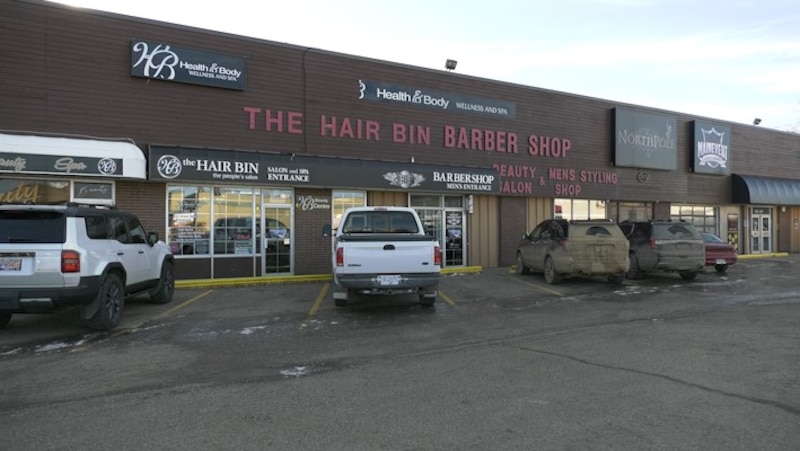
At the Hair Bin Salon and Barbershop in Fort St. John, assistant manager Amber Zarbock said foreign workers are key to the success of the business.
“We cannot get local skilled tradespeople, so this is why we’ve had to look at other avenues and hire foreign workers,” she said.
Zarbock said a lot of work goes into bringing foreign workers to Northeast BC.
Before hiring them, businesses must obtain a Labour Market Impact Assessment (LMIA) to prove there is a real need for foreign workers and that no Canadian citizen can fill the job.
Then, local businesses have to invest in additional training for newcomers working in Canada for the first time, such as sanitization and safety training.
Newcomers must adapt to a completely new country while learning a new job, language, and way of life.
Raj Singh came from India over four years ago and is now a barber at the Hair Bin. He comes to work every morning with one goal in mind – becoming a permanent resident.
“Everyone has dreams, and nobody wants to leave their home. Everybody wants to be part of a good community where they can get the appreciation for your skills,” Singh said.

Zarbock said she’s worried the foreign workers employed at the Hair Bin won’t be able to stay in Canada.
“We have individuals with work permits that are expiring next year and no sign of them getting approved for their permanent residency,” she explained.
Zarbock said the Rural Community Immigration Pilot (RCIP) program was put in place by Ottawa to facilitate the path towards permanent residency.
To apply, a foreign worker must have a valid job offer from a designated employer, at least one year of related experience, prove language abilities, a Canadian educational credential (or equivalent), and proof of having enough money to support themselves and their family.
This year, the federal government has only allocated 80 application spots for northeast BC.
Originally, the region was allocated only 60 spaces, but this was increased by 20 after receiving a high number of applications.
40 of those are reserved for the sales and service sectors, which include hair salons, and they have all been filled.
Zarbock said there are not enough spaces available because around 500 local businesses have applied to recommend their workers for the program.
As for Singh, it would take 227 days for him to receive a work permit extension if he needed one today.
Without the extension or enough points to receive his permanent residency, Singh risks being sent back home.
“That seems to be the issue. We are sending back people who are already living here, paying taxes, and contributing,” Zarbock said.
From a business standpoint, she added that these workers have also become valuable and can’t be lost.
A new report from Ottawa said that after revised rules kicked in last year, it became harder to get a Temporary Foreign Worker Permit.
As a result, the number of applications to the program fell by half.
In the first 10 months of 2024, approximately 162,100 work permits were issued to new foreign workers through the Temporary Foreign Worker Program.
The target was set at 82,000 entries into Canada for 2025.