In the first part of CTV News’ Falling Through the Cracks series, Nathan Whynot’s family described years of unsuccessful attempts to get him treatment as he battled paranoid schizophrenia and addiction. They say repeated visits to hospitals ended with him being discharged, despite his deteriorating mental health.
When Nathan entered B.C.’s justice system, his mother, Jodi Tanner, hoped he would finally receive the long-term psychiatric care she believed he desperately needed.
Instead, she says his condition continued to worsen.
After spending three years in custody, Nathan was released without the long-term treatment his family had hoped for. Two months later, on April 22, 2026, the 27-year-old died of a fatal overdose.
Now, his family is questioning whether more could have been done while he was in custody, and whether gaps between B.C.’s justice and mental health systems contributed to his death.
Mental illness and addiction shaped Nathan’s early years
Tanner says Nathan began using drugs at just 15 years old to cope with anxiety and depression. Over time, his mental health deteriorated, and he was repeatedly admitted to hospital.
By his early twenties, his next stop was the criminal justice system.
“We did lose him for quite some time while Nathan was in custody. He was in custody for three years,” Tanner said.
She says Nathan’s legal troubles began with drug trafficking before escalating to the 2020 arson at the Dawson Creek Walmart, where he later pleaded guilty to setting the fire that caused more than $1 million in damage.
Mental health declined while in custody
Tanner says Nathan’s psychosis worsened during his time in custody.
Because he had not been certified under B.C.’s Mental Health Act, she says correctional staff were unable to administer psychiatric medication without his consent.
About a year into his sentence, she says he stopped communicating with his family altogether.
“About a year into Nathan being in custody, a year and a half, he stopped communicating with us. He stopped calling.”
She says Nathan repeatedly fired lawyers, changed his pleas before judges and made suicidal comments while incarcerated.
When he was released after serving three years, Tanner says there was no comprehensive discharge plan.
“When he was released... they just basically opened the doors and said, ‘Here you go, out to the world.’”
Back into crisis
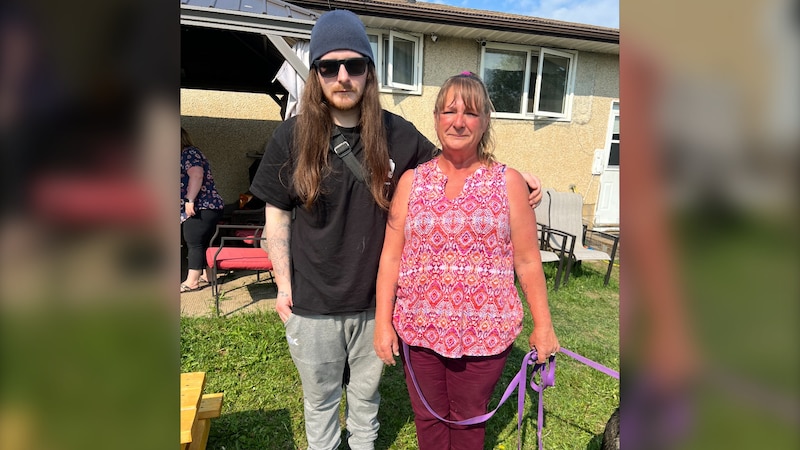
Within weeks of his release, Tanner says Nathan was homeless, sometimes staying at the local shelter and at other times sleeping in a storage locker.
During one visit home, she says Nathan assaulted her and her husband.
Faced with few alternatives, Tanner made what she describes as one of the hardest decisions of her life: pressing criminal charges against her own son.
“When Jody came in that day, she already knew that that was probably the best route for her to take,” said Sgt. Shawn Peddle. “She decided that pressing charges was, at that time, the right way to go to get Nathan the help that she knew he needed.”
Only two months after his release, he was arrested again.
Experts say families are left with impossible choices
Representative for Children and Youth Dr. Jennifer Charlesworth says Nathan’s experience reflects a larger systemic problem.
“The system walks families to the ledge and gives them no choice but to do things that are quite drastic,” she said.
Former Dawson Creek case management director Jan Atkinson says many people released from custody return to the same environments that contributed to their struggles.
“Lots of times it’s the same people, places and things that they return to,” she said.
A psychiatric assessment brought hope
Court records show that in 2023, Nathan was found unfit to stand trial and ordered to undergo a psychiatric assessment.
Tanner recalls watching her son struggle in court.
“He was speaking to people that were behind him that weren’t behind him. He was doing things with his hands.”
Nathan was transferred to the remand centre at Colony Farms in Coquitlam, where people are assessed to determine whether they are fit to stand trial.
Tanner says it was the first time she saw him receive consistent psychiatric care.
“I could notice a difference. However, was his psychosis completely under control? No.”
Even while receiving medication, Tanner says Nathan remained deeply psychotic. At one point, she says he asked her to help him join the Russian army.
She hoped he would eventually be transferred to the forensic psychiatric hospital at the same site for longer-term treatment.
Under B.C.’s Mental Health Act, patients may be admitted for involuntary treatment if clinicians determine they meet the legal criteria.
“It’s really, really important that we create the legislative apparatus so that if somebody does need to be detained, it’s done in a humane way, and they get the treatment and support they need,” Charlesworth said.
Nathan was never transferred.
Instead, he was released on time served in February 2025.
“I don’t know why he couldn’t stay,” Tanner said. “It was the only place that was helpful.”
Support faded after release
Tanner says a care team was initially established following Nathan’s release but that much of the support quickly disappeared.
“I think what happened, especially in Nathan’s case, is that he really wanted to advocate for himself, but he really wasn’t able to,” Atkinson said.
Following a brief hospital stay, Nathan was discharged to the Mile Zero Motel.
Eleven days later, a fire in his room led to his eviction, forcing him back into his parents’ home.
“We have called this house the House of Horrors,” Tanner said. “My house became a very dangerous place to be when you have somebody with paranoid schizophrenia and using drugs.”
Eventually, Tanner says she made another painful decision: asking her son to leave in the hope that another offence would send him back to Colony Farms, where she believed he was safest.
That opportunity never came.

A tragic ending
Nathan Whynot died of an overdose in the bathroom of a Subway restaurant. His body was not discovered for approximately five hours.
“I wanted to be the person to tell her because of our relationship,” Sgt. Shawn Peddle of the Dawson Creek RCMP said. “So I’m glad that I was able to do that. But also, it was a very sad moment in that relationship.”
Now, Tanner says she is left grieving not only the loss of her son, but the life she believes he never had the chance to live.
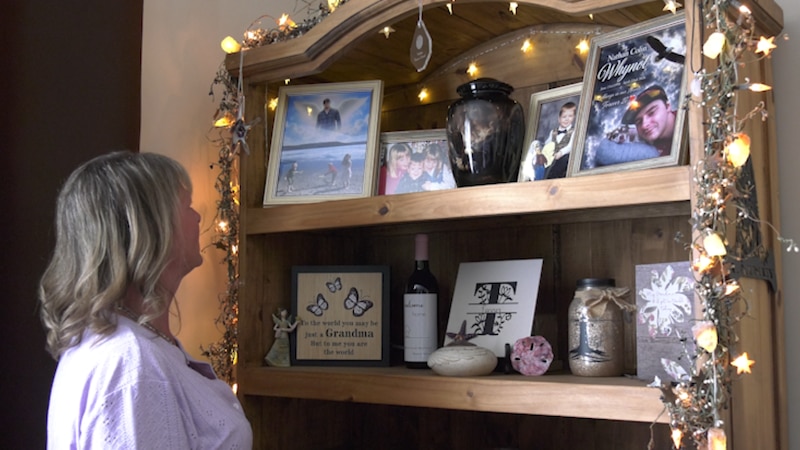
“He was 27 years old, which is far too young for a young man to be sitting on a shelf in an urn,” she said. “I have to grieve a son that never got to live. He wasn’t allowed to live because nobody did their jobs.”
A call for change
Tanner says sharing Nathan’s story is about more than her family’s loss.
She hopes it sparks meaningful changes within both B.C.’s health-care and justice systems, particularly for people living with severe mental illness and substance use disorders.
Without stronger collaboration between front-line workers, health authorities and the justice system, she fears more people will continue to fall through the cracks, with devastating consequences for families across the province.