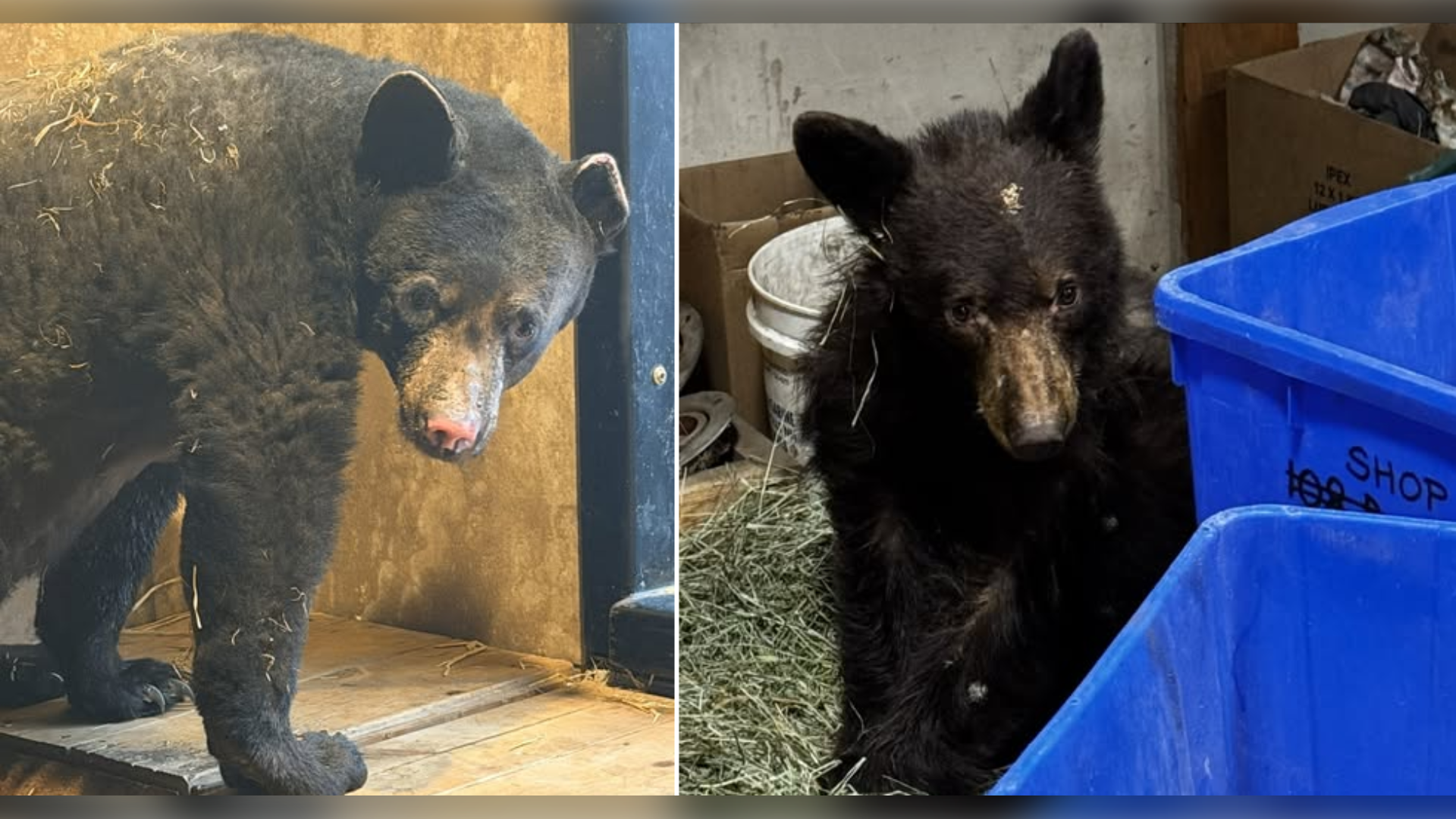
Valkyrie, the badly burned black bear cub found on a highway near Dawson Creek, B.C., shortly before Christmas has made “remarkable” progress, according to the wildlife rescue facility caring for her.
The update comes as Northern Lights Wildlife Society prepares to welcome another rescued bear cub into its Smithers-area facility.
The organization provided updates on the two cases on its Facebook page this week.
“Valkyrie’s transformation over 39 days has been remarkable, progressing from a state of despair and injury to strength and confidence,” the first post reads.
“Thanks to dedicated medical care and community support, Valkyrie is now bandage-free, able to stand on both front legs, and is soon to join the other cubs.”
The cub was rescued by volunteers in Dawson Creek on Dec. 20. Initially, the organization thought she was freezing to death in the -34 C cold.
On closer inspection, however, her injuries were determined not to be frostbite, as had been expected, but severe burns.
Angelika Langen, co-founder and director of Northern Lights, told CTV News last month that the cub—and probably its mother, as well—had found shelter underneath a logging operation’s “burn pile,” only to have their hibernation den set on fire above them.
She said logging operations, whether private or commercial, often leave such large piles of wood in heaps, then burn them when needed. Valkyrie’s case is not the first time Langen has seen this outcome.
“We have had cubs that came out of piles where people realised there were cubs in there and actually went in and pulled them out of the fire, little ones, newborns, in the spring,” Langen said last month.
Since arriving at Northern Lights and receiving her name in a contest, Valkyrie has been receiving NanoSALV Catalytic to speed up the healing process, and staff at the facility have worked with doctors via Zoom to monitor the bear cub’s progress.
With Valkyrie’s rehabilitation proceeding well, the NLWS is turning its attention to another black bear cub that was on its way to the facility Friday.
The animal was found “in a weakened condition requiring intervention” between Vernon and Lumby in the Southern Interior.
While the wildlife society’s designated intake period for the region has ended, it was able to obtain special permission to proceed with the rescue.
“Special approval was granted, largely due to the community’s commitment to being bear-aware, as the cub had not been reported interacting with human attractants,” reads a Friday post from the NLWS.
“This is a necessary component for rescue operations at this age of the cub.”
The organization said the cub entered a shed in the area and concerned residents closed the door on it. The animal has now been contained for transport and “received its first meal in an extended period,” the NLWS said.
“It is yet to be determined how severely malnourished the cub may be or whether recovery is possible, but we are so very grateful for the continued collaboration between the community and government in supporting wildlife rehabilitation efforts,” the post reads, adding that the cub was expected to arrive at the facility Friday night.