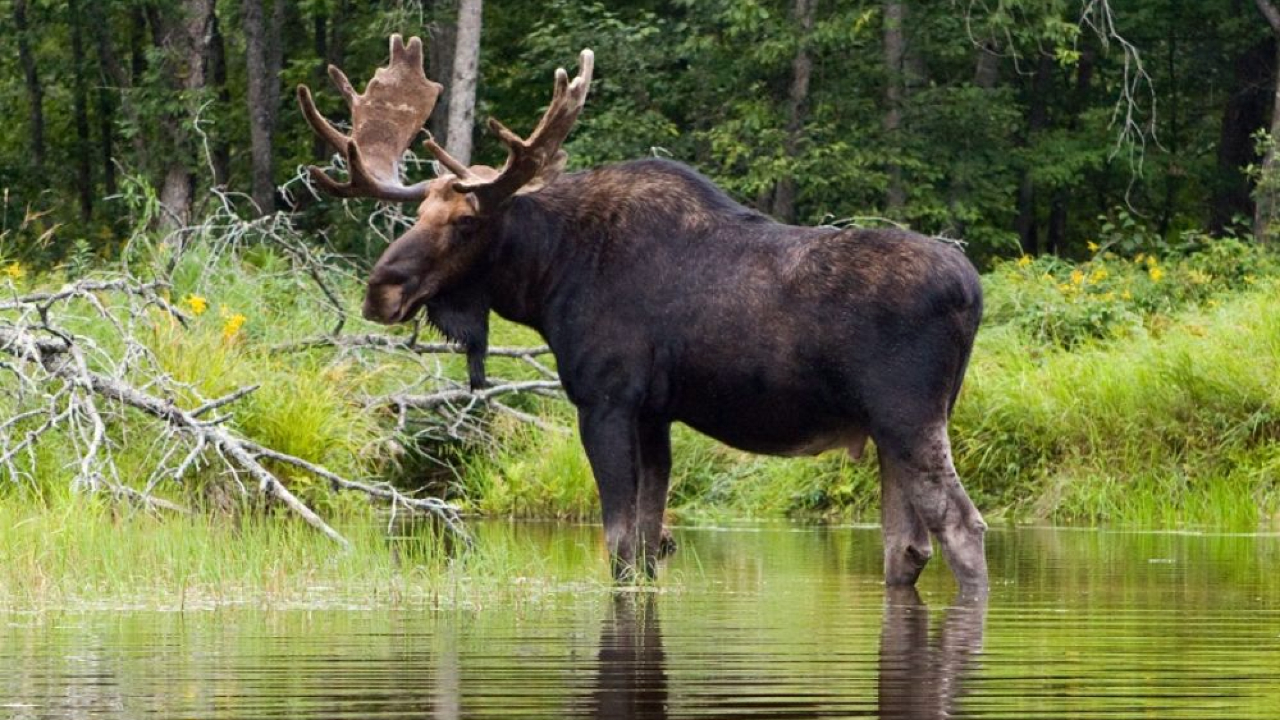
Conservation Officers in the Peace Liard Region say they are monitoring a number of reports of moose sightings around and in the communities of Fort St. John and Dawson Creek.
Officers advise that this is normal behaviour for moose during early spring.
Deep snow conditions in surrounding areas, combined with easy access to food, often draw moose into urban, semi‑urban, and agricultural areas at this time of year.
Moose will commonly enter agricultural properties to feed, particularly where hay or livestock feed is stored and readily accessible.
The Conservation Officer Service (COS) is reminding the public that moose are large animals and should always be given plenty of space—especially cows that may have calves nearby. Moose may act defensively if they feel threatened.
Residents are encouraged to:
- Keep a safe distance and avoid approaching moose
- Keep pets leashed or closely supervised when outdoors
- Keep young children indoors if a moose is nearby
- Never attempt to feed, haze, or chase a moose
Approaching or harassing a moose can provoke defensive behaviour, increasing the risk of injury to people and pets. Dogs, in particular, can trigger defensive responses from moose if allowed to roam freely.
Property owners, especially those on agricultural land, are encouraged to secure attractants such as hay bales and livestock feed where possible to reduce wildlife conflicts.
WildSafeBC is a provincial resource that provides additional information on preventing and reducing wildlife conflicts. More information is available at www.wildsafebc.com.
Anyone who encounters wildlife that poses a risk to public safety is asked to report it to the RAPP (Report All Poachers and Polluters) line at 1‑877‑952‑7277, so Conservation Officers can take appropriate action, if necessary, to help ensure public safety.